Log Off, Plug In: Gaming Communities Are Building Their Own Internet and Not Looking Back
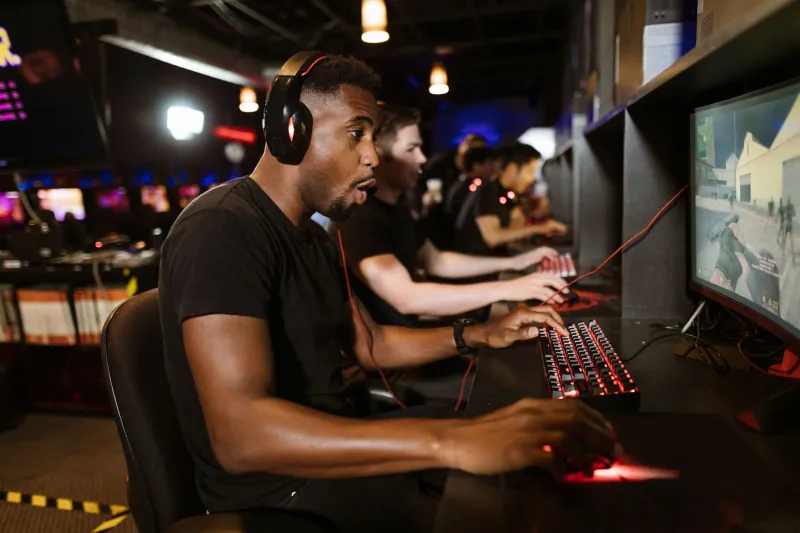
Something is happening at the edges of gaming's online world, and it's not getting much attention on the platforms where it started. Community after community — fighting game locals, retro collectors, indie tabletop crews, speedrunning groups — are pulling up stakes from the big social media platforms and setting up shop somewhere quieter, somewhere they actually own.
It's not a rage quit. It's more like a long, deliberate exhale.
The Last Straw Wasn't One Thing
Ask community organizers why they left and you'll rarely get a single clean answer. For Marcus Webb, who runs a Midwest-based retro fighting game community, it was a combination of things piling up over years. "Twitter's algorithm basically decided our niche content wasn't worth showing to anyone," he says. "We'd post tournament results, local highlights, stuff our members worked hard on — and it'd get buried under whatever was trending that week. We were building for the platform, not for our people."
For others, it was Discord's slow drift toward corporate-friendly features and the creeping anxiety about what happens when a private company decides your server violates some updated policy. Several community managers pointed to high-profile server shutdowns — some justified, some baffling — as the moment they started looking for exits.
TikTok brought its own complications. Short-form video is great for discovery, but terrible for depth. Gaming communities run on deep knowledge — patch histories, frame data, regional metagames, lore debates that stretch back years. You can't build that on 60-second clips.
What They're Building Instead
The tools vary depending on budget, technical skill, and community size, but a few patterns keep showing up.
Self-hosted forums are making a genuine comeback. Platforms like Discourse, which can be spun up on a rented server for a modest monthly cost, give communities full control over their data, moderation policies, and structure. Threads don't disappear because an algorithm decided they weren't engaging enough. Search actually works. Knowledge accumulates instead of evaporating.
Federated platforms like Mastodon or platforms built on the ActivityPub protocol are attracting more tech-savvy organizers who want the social media experience without the corporate middleman. It's not plug-and-play, but for communities with even one person who knows their way around a command line, it's increasingly accessible.
Private wikis and knowledge bases are filling the gap that Discord's chaotic channel structure never could. Game-specific wikis, hosted independently and maintained by community contributors, are becoming the backbone of serious hobbyist scenes. "Our wiki has stuff that took the community fifteen years to figure out," says Priya Okafor, who helps maintain an independent wiki for a cult-classic JRPG fanbase. "We're not putting that on a platform that can disappear or lock us out."
Some communities are going even further — running their own game servers, hosting their own file archives, setting up private Nextcloud instances to share recordings, scans, and documentation. It sounds like a lot of work because it is. But the people doing it will tell you it's worth it.
The Real Cost (And Why People Pay It)
Let's be honest about the tradeoffs. Running independent infrastructure costs money. A basic self-hosted setup might run $10–$30 a month in server costs. Larger operations with media hosting and regular backups can climb higher. Someone has to manage it, update it, fix it when it breaks.
Then there's the visibility problem. Social media platforms, for all their dysfunction, are still where most people discover new communities. Leaving them means giving up that discovery pipeline — at least in the short term.
So why do it? Webb puts it simply: "We stopped trying to grow for growth's sake. We wanted a community that actually functions, that our members can rely on. A hundred people who are genuinely invested beats ten thousand followers who scroll past you."
That philosophy — depth over reach, stability over virality — keeps coming up in these conversations. It's a direct rejection of the engagement-maximization logic that shapes every major platform. And it maps almost perfectly onto what grassroots gaming culture has always valued: showing up consistently, building real skill, contributing to something that lasts.
What Gets Preserved When You Own Your Space
One of the most underappreciated benefits of independent infrastructure is what it does for community memory. Social media is famously bad at preservation. Tweets vanish. Discord servers get nuked. TikToks get taken down. The institutional knowledge that makes a gaming community valuable — the tier lists, the technique breakdowns, the event histories — has no permanent home on platforms designed to keep you scrolling forward, never back.
Independent forums and wikis change that equation. "Our forum has posts from 2019 that are still getting replies and still useful," says Okafor. "That's not something you get on any major social platform. The conversation doesn't die just because it's old."
For gaming's preservation-minded communities — the collectors, the archivists, the folks who care about keeping gaming history intact — this matters enormously. A self-hosted archive is an asset. A social media page is a liability.
The Community-First Internet Isn't New — It's a Return
There's something almost nostalgic about what these communities are building, even if the tools are modern. Forums, wikis, independent servers — this is basically what the early internet looked like before platforms consolidated everything into a handful of walled gardens. The gaming community in particular has deep roots in that era. BBSes, early fan sites, GameFAQs — the culture was built on independent, community-maintained spaces.
In a lot of ways, the migration away from social media isn't a radical new direction. It's a correction. A return to the idea that your community's home should belong to your community.
Not every group will make the jump. The technical barrier is real, and the loss of discoverability is a genuine sacrifice. But for the communities that are doing it — the ones willing to trade reach for roots — the results speak for themselves. Members stay longer. Conversations go deeper. The stuff that gets built actually sticks around.
The algorithm doesn't get a vote. And for a lot of gaming's most dedicated scenes, that's exactly the point.