Roll for Community: Why Board Game Cafés Are Quietly Becoming America's Favorite Hangout
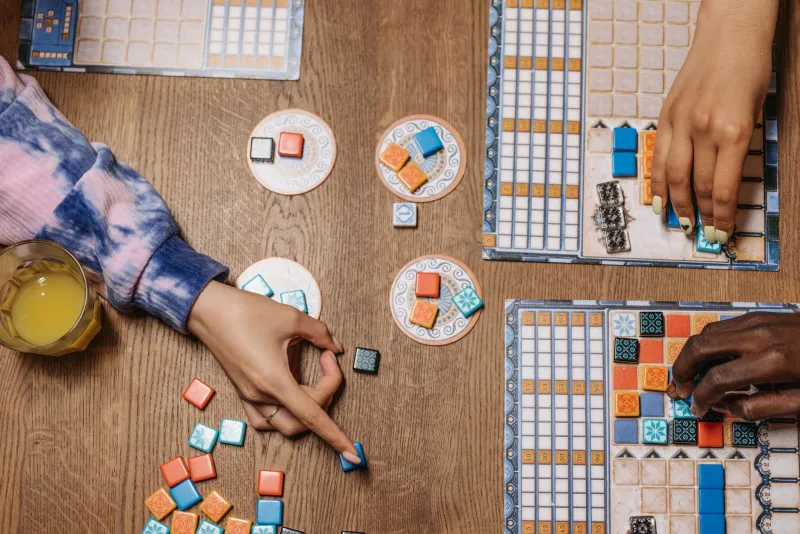
Walk into Joystick Café in Atlanta on a Tuesday night and you might expect a slow crowd. Instead, you'll find every table packed. A group of coworkers are arguing cheerfully over Ticket to Ride. Two college students are learning Wingspan from a staff member who's clearly explained it a hundred times and still means every word. In the corner, a retired couple is deep into a game of Azul they've been playing every week for six months.
This is not an anomaly. From Portland to Pittsburgh, board game cafés are having a genuine moment — and the story behind their rise says a lot about what Americans are actually hungry for right now.
The Third Place Problem
Sociologists have long talked about the concept of the "third place" — somewhere that isn't home and isn't work, where people gather, decompress, and build loose social bonds. Bars used to serve that function for a lot of people. So did bowling alleys, diners, and community centers. But over the past two decades, a lot of those spaces quietly disappeared or stopped feeling welcoming to everyone.
Board game cafés are stepping into that gap in a way that feels almost accidental — except it isn't.
"We didn't set out to solve loneliness," laughs Maria Castillo, co-owner of Hexagon Games & Coffee in Denver. "We just wanted a place where people could play games without feeling like they had to spend forty bucks on drinks to justify the table. But what ended up happening is that people started treating this like their living room."
Hexagon opened in 2021 — yes, right in the thick of the pandemic recovery — and has grown its library from around 200 games to over 800 titles. They charge a flat table fee, keep the coffee flowing, and hire staff specifically for their ability to teach games to strangers without making anyone feel dumb. It sounds simple. It works extraordinarily well.
Not Your Typical Game Store
There's an important distinction worth making here. Board game cafés aren't game stores with a coffee machine bolted on. They're hospitality businesses first, and that shift in philosophy changes everything about how they operate and who they attract.
The typical game store, for all its charm, can carry a certain gatekeeping energy — shelves stacked floor to ceiling, regulars who've been coming in for years, an unspoken knowledge requirement that newcomers sometimes feel acutely. Board game cafés deliberately dismantle that dynamic.
"We get a ton of people who have never played a hobby game in their life," says Derek Okafor, who runs Tabletop Grounds in Columbus, Ohio. "First dates, birthday parties, people who just saw us on Instagram and thought it looked fun. Our job is to make sure they leave thinking, 'I want to come back.' Not to impress them with how many games we know."
That accessibility is showing up in the demographics. These spaces are drawing women, older adults, and people of color in numbers that the traditional hobby game space has historically struggled to reach. Several café owners mentioned that their regulars skew noticeably more diverse than the crowds at local game stores or conventions — and they attribute it almost entirely to the lower barrier to entry and the explicitly welcoming vibe.
The Menu Matters More Than You Think
Here's something that doesn't come up in most think-pieces about board game cafés: the food and drink program is doing serious heavy lifting.
When you're hungry and slightly overwhelmed by a wall of game boxes, a solid grilled cheese and a good latte become a comfort anchor. Several café owners described their menus as a deliberate part of the social design — something familiar and accessible that helps people relax enough to try something unfamiliar.
"Games are intimidating to a lot of people," says Castillo. "Good food takes the edge off. It gives people something to do with their hands while they're learning the rules. It makes the space feel like a café first, which is less scary than a game store."
Some spots are going further, hosting themed food nights tied to specific games, pairing craft beers with dungeon crawlers, or offering game-and-brunch combos on weekends that function almost like a community event. The social layer stacks on itself quickly.
What Happens After the Pandemic
It would be easy to frame this whole trend as a post-pandemic reaction — people starved for in-person connection suddenly flooding into any space that offered it. And there's truth to that. But the owners and regulars we talked to pushed back on the idea that this is just a blip.
"People keep waiting for us to plateau," says Okafor. "We've been open three years. We keep growing. I think what's happening is that people realized how thin their social lives actually were, and now they're being more intentional about it. We're part of that."
Regular patrons echo this. James Whitfield, a 34-year-old software developer in Columbus, started coming to Tabletop Grounds alone, hoping to meet people. Eight months later he's part of a standing weekly group that has now become, by his own description, his closest friend group.
"I didn't even really like board games that much when I started," he admits. "I liked the idea of having somewhere to go. The games were kind of the excuse."
That's the thing about these spaces that's hard to quantify but impossible to miss once you see it: the games are frequently the vehicle, not the destination.
The Designers Are Paying Attention
Board game publishers and indie designers have noticed the shift too. Several smaller studios have started specifically designing games with café play in mind — shorter runtimes, easier teach times, components that hold up to heavy use and the occasional coffee spill.
A handful of cafés have gone further, partnering directly with local designers to playtest prototypes with willing customers, essentially turning their floor into an ongoing community design lab. It's a mutually beneficial arrangement that feels very much in line with the grassroots energy that defines the best of gaming culture right now.
Why This Matters for the Hobby
For anyone who cares about gaming as a cultural force — not just a product category — board game cafés represent something genuinely exciting. They're building the audience that sustains this hobby long-term, reaching people who would never walk into a game store or sign up for a convention, and doing it through pure hospitality.
They're also modeling something the broader gaming world could stand to learn from: that inclusion isn't a marketing strategy, it's a design principle. You build the space so that everyone feels like they belong, and then you get out of the way and let the community build itself.
The dice hit the table. Someone laughs. A stranger explains a rule. A friendship starts.
That's the whole thing, really.