Insert Coin, Find Your People: The Real Reason Retro Arcades Are Taking Over American Cities
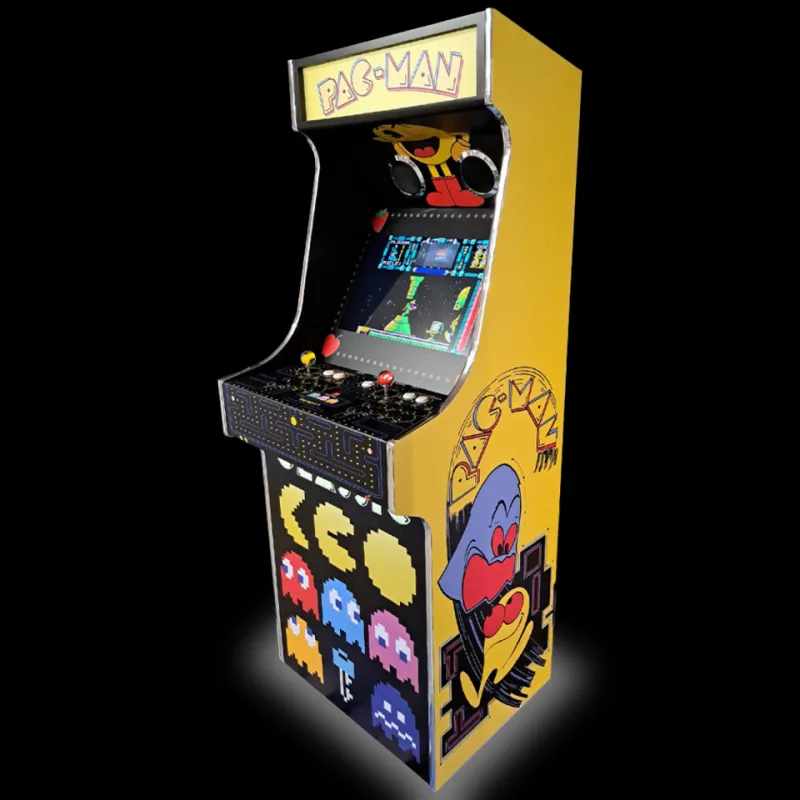
Photo: Fan de Rétro, CC BY 4.0, via Wikimedia Commons
Walk into Ground Kontrol in Portland on a Friday night and you'll see something that shouldn't, by any economic logic, be happening. People are lined up to pay for the privilege of playing games they could technically emulate for free at home. They're feeding quarters into Galaga cabinets, competing on Street Fighter II, and cheering each other on over Donkey Kong high scores. And every single one of them looks like they're exactly where they want to be.
The retro arcade revival is real, it's spreading, and if your city doesn't have one yet — it probably should.
More Than Nostalgia
Let's get one thing straight up front: the best of these new-wave arcades aren't just cashing in on boomer memories. Yes, the machines are old. Yes, the games trigger something primal in people who grew up pumping quarters into mall cabinets. But the venues that are actually thriving have figured out that nostalgia alone doesn't pay rent.
"We knew pretty early that if we built this purely as a nostalgia experience, we'd get one visit from people my age and that's it," says Tom Barrera, co-owner of Pixel Palace, a retro arcade bar in Denver that opened in 2021 and has become one of the city's most reliably packed spots on weekends. "We wanted people to come back. That means building a place, not just a museum."
Pixel Palace runs weekly tournaments, hosts birthday parties, partners with local breweries for tap takeovers, and recently started a "learn to play" night where regulars teach newcomers how to actually get good at classic titles. The cabinets are authentic — lovingly restored originals alongside high-quality reproductions — but the experience is designed for 2024, not 1984.
The Social Itch That Home Gaming Can't Scratch
Here's the uncomfortable truth that the gaming industry doesn't love talking about: for all the incredible technology in modern home setups, a lot of people are playing alone and feeling it. Online multiplayer is technically social, but sitting in your apartment with headphones on isn't the same as standing shoulder-to-shoulder with a stranger, both of you sweating over the same boss fight.
Retro arcades figured out that their real competition isn't PlayStation or Xbox — it's bowling alleys, escape rooms, and axe-throwing venues. They're in the business of going out and doing something together, and they're winning that competition in a lot of cities.
"I bring first dates here," says Jasmine Okafor, a regular at a retro arcade in Chicago. "It's way better than a bar because you actually have something to do together and talk about. You learn a lot about someone by watching them handle losing at Pac-Man."
That kind of use case — the arcade as social infrastructure rather than pure entertainment venue — is showing up everywhere these spaces are succeeding.
Preserving Playable History
There's also a cultural preservation angle here that deserves serious respect. Original arcade cabinets are aging hardware. The CRT screens, the custom control boards, the physical components that make a 1980s Centipede cabinet feel the way it does — that stuff doesn't last forever without active maintenance and care.
Many of the people running these arcades are, functionally, curators. They're sourcing machines, restoring them, and making them accessible to the public in a way that private collectors can't. It's the difference between a museum with velvet ropes and one where you're encouraged to touch everything.
"I've had kids come in who've never touched a joystick that wasn't an analog stick," says Marcus Webb, who runs a retro arcade and game preservation space in Columbus, Ohio. "Watching them figure out Asteroids for the first time, on the original hardware — that's a real thing. That experience doesn't exist on an emulator the same way."
Marcus's space, called The Last Level, operates on a hybrid model: part arcade bar for the evening crowd, part community center on weekend afternoons when families come through. He's partnered with a local school district to bring field trips in. The mission, he says, is explicitly about keeping gaming history touchable.
The Business Model Question
Not every retro arcade makes it. The economics are genuinely challenging — real estate costs, machine maintenance, alcohol licensing in many cases, and the need to keep programming fresh enough to drive repeat visits. A few high-profile openings have closed within a year or two of launch, usually because they leaned too hard on the novelty without building a reason to return.
The ones that survive tend to share a few traits. They're embedded in their local communities rather than positioned as tourist destinations. They have a bar or food program that provides consistent revenue independent of game play. And they run events — tournaments, leagues, themed nights — that give regulars a calendar to follow.
Free-play models (flat admission, unlimited games) versus pay-per-play also matter more than people expect. Free-play tends to attract longer stays and group visits, which drives bar revenue. Pay-per-play can feel more authentic to the original arcade experience but creates friction that discourages casual drop-ins.
Why Your City Needs One
If you're in a mid-sized American city and you don't have a retro arcade yet, you're probably getting one soon. The model has proven out in enough markets now that entrepreneurs are paying attention. But the community matters in how these places turn out.
The best retro arcades aren't built for communities — they're built by them, or at least in close partnership with the local gaming culture that already exists. When a space emerges from genuine love of the medium and real investment in the people who'll walk through the door, it shows. When it's a calculated bet on a trend, that shows too.
At HH Targ, we're obviously partial to spaces where gaming culture gets treated as something worth preserving and celebrating. Retro arcades, at their best, are exactly that — living archives where history isn't behind glass, it's under your fingertips, and the person next to you is rooting for you to beat the high score.