Rolling for Resilience: How Tabletop RPGs Are Quietly Filling the Gaps in America's Mental Health Landscape
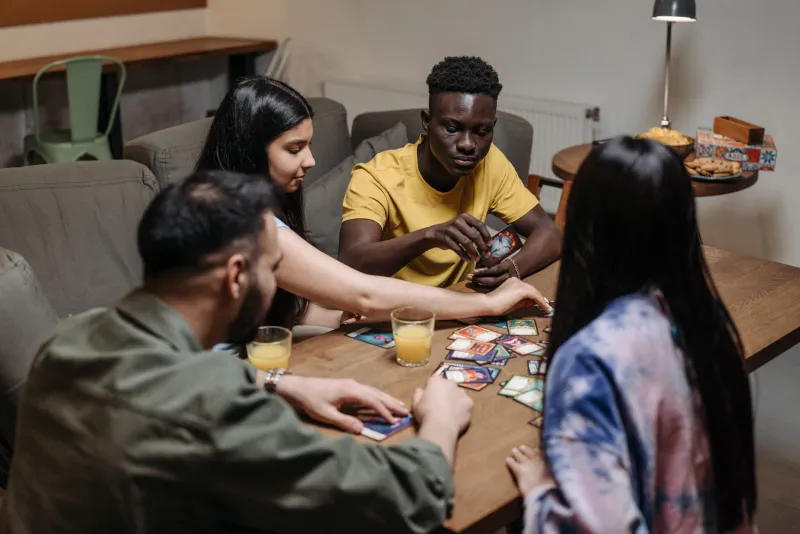
There's a moment that happens at almost every tabletop RPG table, and if you've played long enough, you've probably seen it. Someone's character — a brooding ranger, a scarred paladin, a rogue who trusts nobody — does something unexpectedly vulnerable. And the player behind that character goes quiet for a second. Sometimes they laugh it off. Sometimes they don't.
That moment, small and easy to miss, is exactly what a growing number of mental health professionals, community organizers, and veteran Game Masters say makes tabletop roleplaying games uniquely powerful. Not as a replacement for therapy. Not as some kind of magic fix. But as something that's genuinely hard to find in America right now: a low-stakes, community-driven space where it's okay to feel things out loud.
The Table as a Third Place
Licensed counselor and longtime D&D player Marisol Vega runs a weekly game at a community center in Albuquerque, New Mexico. She's careful not to call it therapy — because legally and practically, it isn't. But she's equally careful not to dismiss what she watches happen every Thursday evening.
"People come in carrying stuff," she says. "Work stress, family drama, grief. And for three hours, they get to be someone else while still being themselves. That's not nothing. That's actually really significant."
Vega started the group three years ago after noticing that several of her clients — particularly young adults dealing with social anxiety — mentioned tabletop gaming as one of the few social activities that didn't feel overwhelming. "There's a built-in structure," she explains. "You have a role. You have rules. You have a reason to be in the room. For someone who finds unstructured socializing terrifying, that scaffolding is everything."
She's not alone in that observation. Mental health researchers have increasingly turned their attention to what some are calling "analog social play" — face-to-face games that require sustained collaboration, imagination, and emotional investment. Tabletop RPGs, with their emphasis on shared storytelling and character development, keep showing up as a standout.
Small Towns, Big Tables
The therapeutic potential of RPGs isn't just an urban phenomenon. In Harlan County, Kentucky — a rural community that's faced decades of economic decline — a local librarian named Darnell Hutchins started a Pathfinder group in 2021 with a simple goal: give teenagers somewhere to be on Friday nights.
What he didn't expect was how quickly those Friday nights became something more than a hobby.
"These kids don't have a lot of options," Hutchins says. "Counseling services are limited. Extracurriculars are underfunded. But they showed up to this. Every week. And they started opening up — through their characters, through the story — in ways they just weren't doing anywhere else."
He recalls one player, a sixteen-year-old who'd lost a parent, who spent months playing a character obsessed with resurrection spells. "He never talked about his dad directly at the table. But the whole campaign, his character was trying to bring someone back. Eventually, we had a session where it became clear that wasn't going to happen in the story. And he cried. And then he talked. Not about the game."
Hutchins is quick to acknowledge he's a librarian, not a therapist. But he's also seen enough to know that something real is happening at his table. "I just create the space. The game does the rest."
Designing for Everyone
One of the most interesting developments in the RPG community over the past several years is the deliberate effort to make these spaces more accessible — not just physically, but emotionally and neurologically.
Groups like the Accessible Gaming Initiative and various Discord communities focused on neurodivergent players have developed what they call "safety tools" for tabletop play. These include things like the X-Card (a simple signal that lets any player pause or skip content that feels too intense), Lines and Veils systems that let groups establish hard limits before a campaign starts, and session-zero conversations where players can share any triggers or boundaries without judgment.
For neurodivergent players in particular — those with ADHD, autism spectrum conditions, anxiety disorders, or sensory processing differences — these tools can be the difference between feeling included and feeling overwhelmed.
"I've been playing D&D for six years and it's genuinely one of the only social environments where I don't feel like I'm constantly performing," says Marcus, a 28-year-old from Atlanta who identifies as autistic. "The game gives me something to focus on. There's a reason for every interaction. And my Game Master is great about checking in. It took me a while to trust that, but now it's the thing I look forward to most every week."
Game Masters who work intentionally with accessibility-focused groups say the design work isn't complicated — it mostly comes down to communication and consistency. "You set expectations early, you check in often, and you never make someone feel weird for needing something specific," says Toni Reyes, a GM in Chicago who runs campaigns specifically for adults with trauma histories. "The game is flexible. People just need to know that."
What the Research Is Starting to Say
Formal academic study of tabletop RPGs as a therapeutic tool is still in early stages, but the signals are encouraging. A 2021 study published in the Journal of Creativity in Mental Health found that structured collaborative storytelling — including tabletop RPGs — showed measurable benefits for social functioning and emotional regulation in adolescents. Other researchers have pointed to the games' built-in empathy mechanics: players are literally required to consider how another person (their character, their party members, the NPCs) thinks and feels.
Dr. Lena Marsh, a clinical psychologist in Portland who has written about play-based interventions for adults, puts it plainly: "We've known for decades that narrative is one of the most powerful tools humans have for processing experience. Tabletop RPGs just happen to be a really effective delivery system for that."
She's careful to note that RPGs aren't a substitute for professional mental health care, and that some content — particularly in games with dark or violent themes — requires thoughtful facilitation. But as a community-based supplement? "Honestly, I recommend it to patients pretty regularly. Especially people who are isolated."
The Community Is the Point
Maybe the most important thing about tabletop RPGs as a mental health resource isn't the storytelling, or the safety tools, or even the structured social interaction. Maybe it's simpler than that.
It's the people at the table.
"There's this thing that happens when you've been playing with the same group for a year or two," says Darnell Hutchins back in Harlan County. "You know each other's characters. You know each other's tells. You've been through stuff together — fictional stuff, sure, but real emotions. That builds something."
In a country where loneliness rates are at historic highs and mental health resources are stretched thin, a group of people sitting around a table with dice and character sheets might not seem like much. But for a lot of Americans, it's turning out to be exactly enough.
And honestly? That's worth rolling for.