Family Save States: Why More Households Are Ditching the Digital Storefront and Building Gaming Legacies That Last
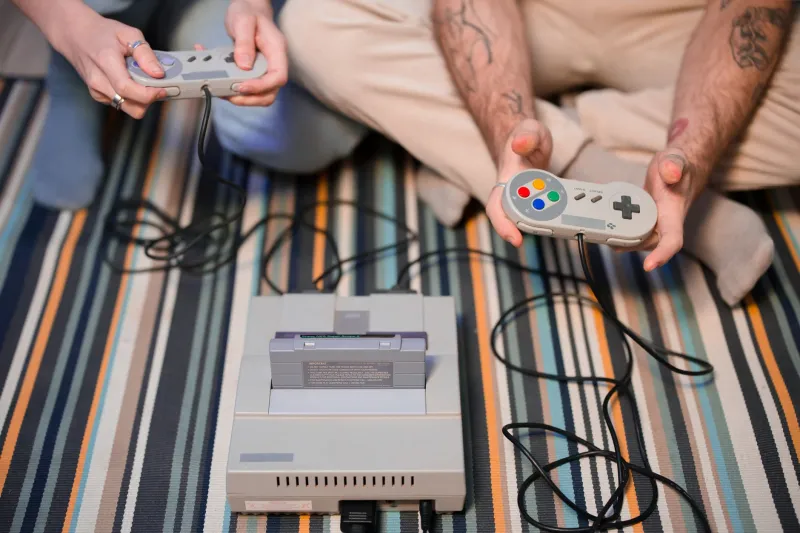
Somewhere in a suburb outside Columbus, Ohio, a twelve-year-old named Dani is learning what a cartridge feels like for the first time. Her dad, Marcus, is walking her through the ritual — blow on the pins (yes, he knows it doesn't technically help, but tradition is tradition), slide it into the slot, power on. The game that boots up is Super Mario Bros. 3, a copy he bought at a garage sale in 2003 for two bucks. It still works perfectly.
"She's played a hundred games on our Switch," Marcus says, "but half of them are just gone now because the storefront changed. That cartridge? That's not going anywhere."
Marcus and his family are part of a quietly growing movement — one that doesn't have a catchy name or a manifesto, but is very real in hobby spaces, gaming forums, and community swap meets across the US. Call it intentional collecting. Call it platform diversification. Call it a family hobby with surprisingly deep roots in digital rights philosophy. Whatever label fits, more households are making deliberate choices to build gaming libraries that stretch across decades, devices, and formats — specifically because they've learned the hard way that renting access to a game isn't the same as owning it.
The Digital Ownership Wake-Up Call
If you've been paying attention to gaming news over the past few years, you already know the pattern. A storefront shuts down. A license expires. A company gets acquired, and suddenly a library of titles vanishes from your account. The PlayStation Store's near-shutdown of PS3 and Vita titles in 2021 rattled a lot of people. So did the quiet removal of hundreds of games from Xbox Game Pass without much notice. And when Ubisoft started pulling games that customers had "purchased" digitally, it stopped being an abstract concern and became a very concrete one.
For families who game together, this hits differently. It's not just about one person losing access to something they paid for — it's about a shared experience being erased. A game a parent wanted to revisit with their kid. A title that defined a specific summer. A franchise that bridged generations.
"We had this whole library on a platform that basically doesn't exist in the same way anymore," says Trina, a mom of three in the Denver area. "My oldest remembers playing those games with us. My youngest never got the chance. And there's no real way to get them back."
That experience sent Trina down a rabbit hole that a lot of collectors will recognize — hunting for physical copies, learning about emulation, exploring open-source platforms, and eventually building what she now describes as a "resilient" gaming setup that doesn't depend on any single company staying solvent or generous.
Building the Archive: What It Actually Looks Like
For most families doing this, the collection isn't just retro nostalgia for its own sake. It's more like a deliberate portfolio. Physical cartridges and discs form one layer. Older consoles — NES, SNES, Sega Genesis, PS1, PS2 — get picked up at thrift stores, flea markets, and community swap meets, often for surprisingly reasonable prices. These become teaching tools as much as entertainment.
But the collection usually doesn't stop at hardware from the '80s and '90s. Many families are also incorporating open-source and indie-friendly platforms into their setups. Devices like the Anbernic handhelds and Miyoo Minis have become popular because they run open-source firmware and can legally play a wide range of titles — including many games that have effectively entered an ownership gray zone because the companies behind them no longer exist. Others are investing in GOG libraries specifically because the platform sells DRM-free games: you download them, you keep them, full stop.
For the Martinez family in San Antonio, the setup spans three generations literally. Grandpa Eduardo still has his original Atari 2600. His son Ray grew up on NES and SNES. Ray's kids, now teenagers, came up on PS4 but have spent the last two years getting deep into the family's retro library as a weekend ritual.
"We don't frame it as 'old games,'" Ray explains. "We frame it as history. Like, this is where the medium came from. You want to understand why games are the way they are now? Play these."
Teaching More Than Gameplay
That educational framing keeps coming up in conversations with families doing this. It's not just about preserving fun — it's about preserving context. Understanding how design constraints shaped creativity. Seeing how storytelling evolved. Recognizing the cultural moments that certain games represent.
There's also a practical media literacy angle that some parents are leaning into hard. When you explain to a kid why a game they loved just disappeared from a digital storefront, you're teaching them something real about how corporate ownership works, what licensing actually means, and why "you bought it" doesn't always mean what it sounds like.
"My son asked me why we couldn't just redownload a game we'd paid for," says Keisha, a parent and community organizer in Atlanta who also helps run a local gaming swap meet. "That question opened up a two-hour conversation about digital rights, corporate incentives, and why physical media matters. He's thirteen. He gets it now."
Keisha's household runs what she calls a "three-tier" system: physical media for anything they want to keep permanently, a curated digital library on DRM-free platforms for convenience, and a dedicated device running open-source emulation software for titles that are otherwise inaccessible. She's careful to stay on the right side of the legal lines around emulation — only running software for systems she owns — but she's also clear-eyed about why the preservation community exists at all.
The Community Layer
One thing that stands out about families doing this intentionally is how community-connected the hobby tends to be. They're not just building solo archives in isolation — they're swapping tips on forums, attending local game swaps, sharing recommendations in Discord servers, and connecting with preservation communities that overlap significantly with the grassroots gaming world.
That community layer matters because the knowledge base is real. Finding reliable cartridge reproduction guides, learning which third-party controllers are actually worth buying, understanding how to properly store physical media — none of this is obvious, and a lot of it lives in hobbyist communities rather than in any official documentation.
"We found our people at a local retro gaming meetup," Marcus from Columbus says. "Now we've got a whole group chat where we share finds, warn each other about bad repros, help each other track down specific titles. It feels like a neighborhood thing, even though half these people live across the country."
An Archive That Actually Belongs to You
There's something quietly radical about what these families are doing, even if they don't always describe it that way. In an era when "access" has increasingly replaced "ownership" as the default model for media consumption, building a physical and diversified gaming library is a form of pushback — one that also happens to be genuinely enjoyable and, in many cases, pretty affordable when you're patient and plugged into the right communities.
The games Marcus's daughter Dani plays on that old cartridge aren't going to disappear when a subscription lapses or a licensing deal falls through. They'll be there when she's a teenager, and maybe when she has kids of her own. That's not nothing. That's actually kind of everything.
The corporate platforms will keep changing. Storefronts will come and go. But a well-maintained cartridge in a dry, cool shelf? That thing's got decades left in it. And the family that built the collection around it? They know exactly what they have — and why it matters.